Happy Holidays from MFU

We here at MusicFor.Us want to wish everyone a happy holiday season.  A time of reflection and anticipation of the joys of friends, family, and celebrations. We will be taking some time off from posting new articles until after the new year so we can concentrate on the personal connections we all should be fortunate to share. If you find yourself unable to have people to share the season with, might we suggest volunteering your time helping others have some joy this year. You may well find that giving your time and companionship is the best gift you can give, including for yourself. Like music, our lives are best when shared. Our wish is for you to find peace, laughter, and to make new memories. Make joyous music a central part of your festivities. Our best wishes for all.

Pomplamoose – Always in the Season

If you wish, you can review some of the ~170 articles we’ve already posted by clicking on the “Index Of Articles” during our sabbatical.

Your MFU staff.

Hits: 18

[Total: 0   Average: 0/5]

Dion – The Wanderer (1961)


Dion - The Wanderer - HD - Video - Stereo Sound .


Dion recalled in Mojo magazine March 2008:

I was trying to do what they (his record label) wanted me to do. It was the times, you know? You could say ‘The Wanderer’ is my little white version of ‘I’m A Man.’ I saw Bo Diddley do ‘I’m A Man’ and he had this big belt buckle and I thought, I gotta get a song like that, so I did ‘The Wanderer.’ But if you listen to the lyric, it’s really a sad song, and it actually turns in on itself, because it says ‘I roam from town to town/I go through life without a care/I wave my two fists of iron/but I’m goin’ nowhere.’ You’ve got a thin veneer of what a man is. The guy’s goin’ to hell, but he’s having a lot of fun doin’ it.

However, on the original demo of the song, the lyrics were “with my two fists of iron and my bottle of beer”, and the change to “with my two fists of iron but I’m going nowhere” in fact seems to have been at the record company’s insistence.

Dion told Blueswax in 2009:

The other inspiration was a little bit of “Kansas City,” because that song was popular at the time and I loved it. The big inspiration was this kid in the neighborhood… I think his name was Jackie Burns. He was a sailor and he had tattoos all over him, like he had ‘Flo’ on his left arm, ‘Mary’ on his right. Janie was the girl that he was going to be with the next night and then he put ‘Rosie’ on his chest and he had it covered up with a battleship. Every time he went out with a girl, he got a new tattoo. So the guy was worth a song!

In the late 1950’s, during the golden age of Doo-wop, a young Italian boy from the Bronx was given the chance to record a record. Dion Francis DiMucci sang lead to a pre-recorded song, “The Chosen Few”, with everything but the lead vocals. The backing vocals were by a group called The Timberlanes. Dion said that he had never met the Timberlanes and didn’t even know who they were.

The vocal group was so white bread, I went back to my neighborhood and I recruited a bunch of guys – three guys – and we called ourselves Dion and the Belmonts.

Dion and The Belmonts would record several Top 50 songs and had a measure of success. In 1959 Dion and the Belmonts were part of the historic and tragic Winter Dance Party tour that lost three performers in a plane crash near Clear Lake, Iowa -- Buddy Holly, Ritchie Valens, and J.P. “The Big Bopper” Richardson. DiMucci was offered a seat on the plane by Holly, but thought the fee of $36 was too much for such a short plane ride and declined. Shortly after the tragedy, the quartet hit again with “A Teenager in Love”. It became their first release to break the Top 10, reaching #5 on the Billboard Hot 100. Another Belmont sang lead on that song, Angelo D’Aleo, who went to great efforts to contribute his famous falsetto to the song.

A Teenager In Love-Dion and The Belmonts-Original Song


After their Top 10 success with “A Teenager in Love”, Dion and the Belmonts recorded four more singles. There were musical, personal and financial differences between Dion and members of the Belmonts, and in October 1960, Dion decided to quit for a solo career. By the time of their breakup, eight of their releases had charted on the Hot 100.

They wanted to get into their harmony thing, and I wanted to rock and roll. The label wanted me doing standards. I got bored with it quickly. I said, ‘I can’t do this. I gotta play my guitar’.

Dion recorded a solo album, which didn’t do as well as the record company had hoped. However, he then recorded, with an un-credited new vocal group, the Del-Satins, an up-tempo number co-written with Ernie Maresca. The record, “Runaround Sue,” stormed up the U.S. charts, reaching No. 1 in October 1961. It sold over a million copies, achieving gold disc status. Two months later he followed that up with the solo “The Wanderer”.


By the end of 1961, Dion had become a major star, touring worldwide and making an appearance in the Columbia Pictures musical film “Twist Around the Clock”. At the end of 1962, Dion moved from Laurie Records to Columbia Records; he was the first rock and roll artist signed to the label, which was an anomaly considering that its then-A&R director, Mitch Miller, passionately loathed that particular genre of music.

Following a European tour, Dion returned to the U.S. and was introduced to classic blues by Columbia’s John Hammond. To the consternation of his management, he began recording more blues-oriented material, including Willie Dixon’s “Hoochie Coochie Man” and “Spoonful,” but these releases – some produced by Tom Wilson, with Al Kooper on keyboards – were not commercially successful. He did, however, in June 1965 record fellow Columbia Records contemporary Bob Dylan’s composition “It’s All Over Now, Baby Blue” a half-year before Them (featuring Van Morrison)’s hit version. His other Columbia releases were less successful, and problems with his heroin addiction and changing public tastes, especially The British Invasion, saw a period of commercial decline.

In April 1968, Dion experienced what he identified as a powerful religious experience. After getting clean once again from heroin addiction, an experience he documented in his 1970 song “Your Own Backyard,” he approached Laurie Records for a new contract. They agreed on condition that he record the song “Abraham, Martin & John,” written by Dick Holler (also the writer of the Royal Guardsmen’s “Snoopy Vs. The Red Baron”) in response to the assassination of John F. Kennedy on November 22, 1963 and those of Martin Luther King and Robert F. Kennedy during the spring of 1968.

(((MONO))) Dion - Abraham, Martin and John 45 rpm 1968


For the next few years, Dion’s music became radically different, moving to more contemplative and mature material. He released several albums essentially as a singer-songwriter, to moderate sales, moving to the Warner Brothers label in 1969.

In December 1979, there was a radical spiritual change in Dion, who had become a born-again Christian. Thereafter, his recordings for several years were in a contemporary Christian vein. In 1984, Dion won the GMA Dove Award (Christian Music Award) for the album “I Put Away My Idols”. He was also nominated for Grammy Award for “Best Gospel Vocal Performance, Male” for the same album.

In 1987, Dion agreed to do a concert of his old hits at Radio City Music Hall in New York. This concert helped free him to celebrate both his past and his future, and led to a series of special appearances, including a fundraiser for homeless medical relief. There he shared the stage with fans such as Bruce Springsteen, Paul Simon and Lou Reed, all of whom cited Dion as one of their prime influences.

In a December 9, 2011 article, Dion and his collaborator, writer/director Charles Messina, discussed details about a Broadway play project, titled “The Wanderer: The Life and Music of Dion”, revealing that it will focus on the years between 1957 until the late 60s and will feature more than 20 songs from that era as well as new, original music. In the article, Dion gave his perspective on the story:

You know, I always saw my story as a young Sopranos with great music and a Rocky Graziano Somebody Up There Likes Me ending. It’s a story of redemption. A rock and roll redemption story!

Now a practicing Roman Catholic, Dion pursues prison ministry and reaches out to men going through addiction recovery. He was a member of the American board of directors of Renewal Ministries in 2004. He currently lives in Boca Raton, Florida, and New York City.

“The Wanderer” is ranked number 243 on the Rolling Stone magazine’s list of “The 500 Greatest Songs of All Time”.

In 2000, Dion and the Belmonts were inducted in the Vocal Group Hall of Fame.

Dion was inducted into the Rock & Roll Hall of Fame in 1989 (with a moving introduction by Lou Reed). Controversially, when Dion’s solo induction into the Rock and Roll Hall of Fame occurred, the other original members of the Belmonts were not inducted, and as of 2014, have yet to be. The Belmonts were not well pleased.

Hits: 11

[Total: 0   Average: 0/5]

Mary Wells – My Guy (1964)


My Guy - Mary Wells (1964) (HD Quality)


Written and produced by the legendary Smokey Robinson of The Miracles, the backing music was produced by the equally legendary The Funk Brothers, the Stax Records studio musicians. Stax was a subsidiary of Motown Records.

In 1959, Berry Gordy started his first record label, Tamla Records, running it out of a house he purchased at 2648 West Grand Blvd. in Detroit, Michigan — a location better known as Hitsville, USA. In 1960, 17-year-old Mary Wells approached Tamla Records founder Berry Gordy at Detroit’s Twenty Grand club with a song she had intended for Jackie Wilson to record, since Wells knew of Gordy’s collaboration with Wilson. However, a tired Gordy insisted Wells sing the song in front of him. Impressed, Gordy had Wells enter Detroit’s United Sound Systems to record the single, titled “Bye Bye Baby”. After a reported 22 takes, Gordy signed Wells to his newly-formed Motown subsidiary of his expanding record label and released the song as a single in September 1960; it peaked at #8 on the R&B chart in 1961, and later crossed over to the pop singles chart, where it peaked at #45.

Though she was hailed as “the first lady of Motown“, Wells was technically Motown’s third female signed act: Claudette Rogers, of Motown’s first star group the Miracles, has been referred to by Berry Gordy as “the first lady of Motown Records” due to her being signed as a member of the group, and in late 1959 Detroit blues-gospel singer Mable John had signed to the then-fledgling label a year prior to Wells’ arrival. Nevertheless, Wells’ early hits as one of the label’s few female solo acts did make her the label’s first female star and its first fully successful solo artist. She was also the first Motown artist to be nominated for a Grammy and the first Motown artist to perform outside the US. “Bye Bye Baby” was the very first chart success for the Motown label (to this point, Tamla Records is Berry’s primary imprint) in 1961. In 1962, Wells earned her first and Motown’s first top 10 hits with the Smokey Robinson-penned “The One Who Really Loves Me,” “You Beat Me To The Punch” and “Two Lovers.” And then in 1964, she earned her first #1 with Robinson’s “My Guy.”

“My Guy” was one of the first Motown songs to bring international exposure for the label, eventually peaking at #5 on the UK chart and making Wells an international star. Around this time, the Beatles stated that Wells was their favorite American singer, and soon she was given an invitation to open for the group during their tour of the United Kingdom, thus making her the first Motown star to perform in the UK.

Mary Wells’ ascent was a beautiful thing. Growing up in Detroit with an absent father and a domestic-worker mother, she went through both spinal meningitis and tuberculosis. To deal with the pain of her various illnesses, she lost herself in the church and in music. And by the time she was out of her teens, she was the biggest star of Motown’s early years. Shortly after signing Mary Wells, Berry Gordy transformed her from a songwriter to a performer of other writers’ material. In this capacity, she was one of the first singers in the Motown stable to record a song by the now-legendary Holland/Dozier/Holland songwriting team. That song, “You Lost the Sweetest Boy” (1963), featured the Supremes and the Temptations singing backup to Wells—an indication of where she stood in the Motown hierarchy at the time. It was the songs of Motown Vice President and chief Miracle William “Smokey” Robinson, however, which brought Wells her greatest successes.

MARY WELLS you lost the sweetest boy


But while “My Guy” should have opened the door to even greater achievements for Mary at Motown, it proved to be her last solo hit for them. The duets album with Marvin Gaye delivered singles success with both ‘Once Upon A Time’ and ‘What’s The Matter With You Baby,’ but her 21st birthday gave Wells the opportunity to get out of her deal and, unwisely, she took it. Her career was never the same again. A hit like this probably should’ve led to great things from Wells, but that’s not what happened. Egged on by her husband at the time and upset by the way the label used the money she thought she’d earned to promote the Supremes, Wells demanded to be let out of her Motown contract. (Many years later, when she was battling cancer without health insurance, she sued Motown for missing royalties and got a settlement.)  Berry Gordy allegedly coerced radio stations into keeping Wells’ new records off the airwaves.

Soon enough, Wells signed with 20th Century Fox for more money. But while she kept releasing charting singles into the early ’80s, she never got anywhere near the top 10 again. She went through bad marriages, publicized affairs, temporary retirements, and cancer.

After moving to several labels over the years, and not returning to the success she had once enjoyed, in 1990 Wells recorded an album for Motorcity Records, but her voice began to fail, causing the singer to visit a local hospital. Doctors diagnosed Wells with laryngeal cancer. Treatments for the disease ravaged her voice, forcing her to quit her music career. Since she had no health insurance, her illness wiped out her finances, forcing her to sell her home. As she struggled to continue treatment, old Motown friends, including Diana Ross, Mary Wilson, members of the Temptations and Martha Reeves, made donations to support her, along with the help of admirers such as Dionne Warwick, Rod Stewart, Bruce Springsteen, Aretha Franklin and Bonnie Raitt. In the summer of 1992, Wells’ cancer returned and she was rushed to the Kenneth Norris Jr. Cancer Hospital in Los Angeles with pneumonia. With the effects of her unsuccessful treatments and a weakened immune system, Wells died on July 26, 1992, at the age of 49.

Though Wells has been eligible for induction to the Rock and Roll Hall of Fame, being nominated twice in 1986 and 1987, she has yet to achieve it. She earned one Grammy Award nomination during her career, and in 1999 the Grammy committee inducted “My Guy” into the Grammy Hall of Fame. Mary Wells was given one of the first Pioneer Awards by the Rhythm and Blues Foundation in 1989 and inducted into the Michigan Rock and Roll Legends Hall of Fame in 2006.

Hits: 12

[Total: 0   Average: 0/5]

Donovan – Sunshine Superman (1966)


Donovan Sunshine Superman


Scottish singer-songwriter Donovan Leitch found a new voice with his eclectic and slightly psychedelic third album “Sunshine Superman”. The single of the title song was originally released in the US in July 1966 but would not be released in the UK until December 1966 due to a contractual dispute. This was unfortunate for Donovan, because this would have been considered much more innovative if it was released on schedule. It is notable as one of the first pop albums to extensively use the sitar and other Eastern musical instrumentation while maintaining an overall radio-friendly sound. It was Donovan’s only single to reach No. 1 on Billboard’s Hot 100. It was the first product from the highly successful three-year collaboration between Donovan and producer Mickie Most and is generally considered to be one of the first examples of the musical genre that came to be known as psychedelia.

This song’s kinetic sound was in tune with, as well as ahead of, the times. “I don’t think many people could put their finger on what I was up to,” Donovan told Ultimate Classic Rock in 2012.

Only now, young journalists and history look back and see that in actual fact when you look at the calendar, that the ‘Sunshine Superman’ album was a herald of things to come. A year before “Sgt. Pepper”, a year before [Jefferson Airplane’s] “Surrealistic Pillow”.

In fact, a case could be made for “Sunshine Superman” as the first truly, and fully, psychedelic album. The Beatles and others had obviously dipped in a toe or two, but this was arguably the first album that flowed from start to end with a psychedelic glow.

Donovan told the Guardian in 2016:

It’s primarily a love song, but I was also trying to get to the invisible fourth dimension of transcendental superconscious vision.

“Sunshine” was indeed slang for LSD, but the reference was actually about the sun coming through my flat’s window. “Superman” had nothing to do with the superhero or physical power. It’s a reference to the book “Thus Spoke Zarathustra,” by Friedrich Nietzsche, who wrote about the evolution of consciousness to reach a higher superman state.

The muse, and love interest, that was the inspiration of the song (as well as most songs on the album) was Linda Lawrence.


Linda, of course, was on my mind. I knew she would realize the song was about us. Five other songs on the album also were written for her.

I first met Linda Lawrence in March 1965 in the green room of “Ready Steady Go!,” the British pop TV show. Linda was a friend of one of the co-hosts. She had an art-school vibe, and after a brief conversation, I asked her to dance to a soul record playing. As we jazz danced, I fell in love. In the weeks that followed, Linda and I spent time together. She told me she had recently separated from Brian Jones, the Rolling Stones’ founder. She said while they never married, they had a 1-year-old son named Julian. After their split, Linda lived quietly at home, building her modeling portfolio. In the spring of ’65, she moved to Los Angeles to find work. Brian wasn’t providing financial support, and Linda wanted to start fresh. She left Julian with her mother until she was settled.

Linda Lawrence:

The first time I met Don on “Ready Steady Go!,” I felt something deep. But I had a young son then and I was only 17½. I needed time after Brian [Jones] and I split up. Don courted me all that summer in London and asked me to marry him in L.A. I wasn’t ready. Don was heartbroken, but I did love him. In L.A., I cashed in my return ticket and rented an apartment on the Sunset Strip. Then my London modeling portfolio was stolen and so were the lovely lace and velvet clothes Don had bought me. I couldn’t land modeling work easily, so I supported myself by making clothes and cutting hair. One day in 1966, I was home with my best friend Cathy when “Sunshine Superman” came on the radio. At the end, Cathy just looked at me, “Oh my God,” she said, “he still loves you.”

The story does end well. Donovan:

The song was a smash. Four years later, I was renting my old cottage in Hertfordshire out to two American girls. Lorey, one of them, went to a party at Eric Clapton’s house with Linda, who was back from LA. To this day I don’t know if Lorey was setting us up, but she told Linda: “I’m renting a cottage. Want to see it?” I met them when they came round and Lorey said: “Oh, do you two know each other?”

I gave Linda a hug. Then I grabbed my guitar and we walked into the woods to a field, where we sat down. I sang her a song I was writing. A cow came along and licked her on the face and walked off. We laughed. Soon after, Linda and I moved in together with Julian, and we married on Oct. 2, 1970. Linda and I have been together ever since.

There is more to this song, however, than a nice love story. The writing and recording of this song, and the album it was on, involved quite a few well known musicians.

In late 1965, my U.K. manager introduced me to Allen Klein, who advised the Rolling Stones and would later manage the Beatles. Klein introduced me to Mickie Most, a hugely talented English record producer who wanted to work on my upcoming third album.

When the album was temporarily shelved in early ‘66, Mickie begged me not to play “Sunshine Superman” for Paul [McCartney]. Mickie knew we had an innovative album and he was afraid Paul would like it and be inspired. I played the album for Paul anyway. “Sunshine Superman” was a pioneering work that for the first time presented a fusion of Celtic, jazz, folk, rock and Indian music as well as poetry. Paul liked it. Originally, when we recorded “Sunshine Superman,” it had a subtitle—“For John and Paul.” But we dropped it.

I played it to McCartney anyway. But they were already there, anyway, and George Martin was doing something similar with The Beatles, working out arrangements from ideas they had in their heads. George Martin was The Beatles’ guy and John Cameron was my guy and they both had an appreciation of jazz which was key.

As for some of the musicians who played on the track, there was half of what would become Led Zeppelin: Jimmy Page on lead guitar, and John Paul Jones on electric bass.

He walked in -- he was a session guy [on “Sunshine Superman”]. He did the session and we liked each other. That was as quick as it was. My father worked with me for a while, because I was underage and couldn’t sign contracts. I loved my father; he taught me a lot about poetry and stuff. And he kept everything. He gave me a box of papers that he kept, and in the papers was something from a Jimmy Page session: “Jimmy Page, £3.10.” It was amazing.

The duo reunited in 2011 to perform a note-for-note rendition of the folk artist’s classic 1966 album, and this song.


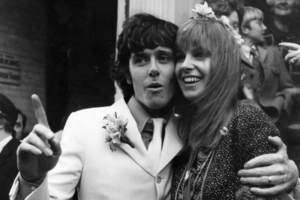
Donovan Philips Leitch (born 10 May 1946) developed an eclectic and distinctive style that blended folk, jazz, pop, psychedelia, and world music (notably calypso). He has lived in Scotland, Hertfordshire (England), London, California, and since at least 2008 in County Cork, Ireland, with his family.

He taught John Lennon a finger-picking guitar style in 1968 that Lennon employed in “Dear Prudence”, “Julia”, “Happiness Is a Warm Gun” and other songs. In an interview with Guitar World, Donovan explained his style:

It’s called the claw-hammer, and it comes from the Carter family and Maybelle Carter, who’s called “Mother” Maybelle now. In the Twenties, she transposed a banjo-picking style to guitar so there’d be a walking bass on the guitar. I learned it from a guy called Dirty Hugh. And I learned it well.

That early folk style, which I taught John and he adapted, would be in a song of mine called “To Try for the Sun” from the Fairytale album from 1965. It’s actually played with a capo. John plays a very clean, basic fingerstyle on “Dear Prudence” and “Julia.” He became quite proficient at it very quickly, and he developed his own style.

Donovan had befriended many of the early artists, such as John and Paul, Joan Baez, Brian Jones, and many others, including Chas Chandler and the Animals. Chas introduced Donovan to Jimi Hendrix on his initial arrival in the UK.

When we got into the music business, Gypsy Dave [Gyp Mills], my road buddy since we were 16, and I used to hang out with the Animals. Gypsy was dating Yvonne, a Swedish girl, and [Animals bassist] Chas Chandler was dating another Swedish girl, the friend of Gypsy’s Swedish girl. It seems a lot of rock bands were dating Swedish girls in the Sixties! So one day, we’re sitting around -- me, Gypsy and Yvonne—and a call came in. It was Chas, and he said to Gyp, “You’ve got to get in a taxi and get to Heathrow. I’m picking up a guitar player from New York. He’s fucking amazing.” So Gypsy finally arrives at this horrible hotel we were staying in because we were busted and couldn’t go back to our apartment [laughs], and there was Jimi. He was thin, had an afro, a matchbox suitcase and a Fender guitar. We were the first to welcome Jimi to England.

In November 2003, Donovan was awarded an honorary degree of Doctor of Letters from the University of Hertfordshire and he was inducted into the Rock and Roll Hall of Fame in 2012 and the Songwriters Hall of Fame in 2014.

Hits: 16

[Total: 0   Average: 0/5]

Peggy Lee – Fever (1958)


Fever - Peggy Lee


While this is commonly known as her “signature song”, it isn’t even a direct cover of the original song. In fact this was her 48th Billboard hit, in a career that had already brought her fame as a singer, songwriter, and actress. Known for her sultry delivery, impeccable timing and bluesy intonation, Lee had already earned her respect of jazz greats while her commercial hits won her legions of admirers. Versatile and prolific, she has become one of the swing era’s most recognisable voices, famous for such hits as “Why Don’t You Do Right” and “It’s a Good Day”, the latter being one of her many original compositions.

“Fever” was written in early 1956 by R&B singer/songwriter Eddie Cooley and pianist Otis Blackwell (under the pen name John Davenport). Blackwell made many contributions to the early rock’n’roll canon, including “All Shook Up”, “Don’t Be Cruel” and “Great Balls Of Fire”, among others. The pair persuaded a young, new R&B singer named Little Willie John to record it. Little Willie had originally resisted recording the song. The 18 year-old did not find it to his liking, expressing particular displeasure at the use of finger snaps throughout. Fortunately, the handlers of the young and temperamental artist talked him into doing the tune. Released on King Records, John’s interpretation was a well-conceived straightforward R&B arrangement featuring foreboding tenor saxophones, a heavy driving beat and bluesy backing vocals. John’s recording of “Fever” became one of his biggest hits, reaching No.1 on the R&B charts and No.24 on the pop charts in 1956.

Fever---Little Willie John


Willie John stayed with King Records until 1963, when the label dropped him, allegedly due to behavioral problems. A combination of factors caused Little Willie’s life to continue on a downward spiral. The partying youngster’s taste for alcohol and gambling led him to frequent somewhat seedy environments, where he sometimes had to endure heckling on account of his short height (about 5’4″). In 1964, John was arrested after a fight in which he attacked another man with a bottle. He jumped bail and left town. Two or three years later another altercation resulted in him allegedly stabbing to death another man which resulted in John receiving a manslaughter sentence. He jumped bail once again, but was finally arrested in May of 1965. Little Willie John ended up spending most of the next two years of his life in prison. They were also his last two years: he died there at the age of 31.

Born Norma Deloris Egstrom (May 26, 1920), known professionally as Peggy Lee, she was a jazz and popular music singer, songwriter, composer, and actress, in a career spanning six decades. From her beginning as a vocalist on local radio to singing with Benny Goodman’s big band, she forged a sophisticated persona, evolving into a multi-faceted artist and performer. During her career, she wrote music for films, acted, and recorded conceptual record albums that combined poetry and music.

Peggy Lee’s cover of “Fever” not only breathed new life into the R&B classic, but revitalised her career. While Lee remained a favourite singer among jazz fans, her swing-era pop vocals had begun to lose relevance among younger audiences. Her subdued yet sensual take on “Fever”, however, spoke directly to a younger crowd while bearing all the wit and sophistication of the coolest jazz records.

While being based on the Cooley/Blackwell song, her version had significant lyrical and instrumental arrangement differences. Since her early beginnings as a dinner club and nightclub singer in the 1940’s, she had intended this song to mainly be a song she could perform live in those environments. She discarded about 10 lines of the original lyrics and wrote many additional lines, Lee came up with new lyrics that chronicled lovers through the ages (including the verses beginning “Romeo loved Juliet,” and “Captain Smith and Pocahontas”). Failing to copyright her new lyrics, Lee’s additions were credited to the original writers, Cooley and Blackwell. The finger snaps, sparse arrangement and satirical storytelling echoed the voice of the Beat Generation. Lee understood this new era and her place in it, and wanted to tap into the burgeoning rock’n’roll audience. She used Beat slang in lyrics such as “Julie, baby, you’re my flame” and “Daddy-o, don’t you dare”, as she swings in a perfect R&B tone over a West Coast “cool school”-inspired arrangement.

Peggy Lee’s version peaked at number eight on the Billboard Hot 100 in the US and spent a total of 12 weeks on that chart. It set a peak at number five on the UK Singles Chart where it first appeared on August 15, 1958. Lee’s recording of “Fever” was a multiple nominee at the very first Grammy Awards ceremony in 1959. “Fever” was nominated for Record Of The Year and also garnered a Best Arrangement nomination, which was questionably bestowed on Jack Marshall, who had not actually been involved, rather than on Peggy Lee. A third nomination at the ceremony was strictly for Lee, in the category of Best Vocal Performance, Female.

Lee was nominated for twelve Grammy Awards, winning Best Contemporary Vocal Performance for her 1969 hit “Is That All There Is?” In 1995 she was given the Grammy Lifetime Achievement Award.

She received the Rough Rider Award from the state of North Dakota, the Pied Piper Award from the American Society of Composers, Authors and Publishers (ASCAP), the Presidents Award from the Songwriters Guild of America, the Ella Award for Lifetime Achievement from the Society of Singers, and the Living Legacy Award from the Women’s International Center. In 1999 she was inducted into the Songwriters Hall of Fame.

Lee continued to perform into the 1990s, sometimes confined to a wheelchair. After years of poor health, she died of complications from diabetes and a heart attack on January 21, 2002, at the age of 81. She was cremated and her ashes were buried in a bench-style monument in Westwood Village Memorial Park Cemetery in Los Angeles.

Hits: 66

[Total: 1   Average: 5/5]

Petula Clark – Downtown (1964)

Petula Clark Downtown. original version


This was Petula Clark’s first hit in the US, which was slow to discover her talents. In the UK, she was a star as a singer and as a television performer, where she was a regular on the BBC. In the early ’60s, she also caught on in France when she started recording her songs in French. Oddly, she didn’t get an American record deal until late in 1964 when a Warner Bros. executive named Joe Smith, who was vacationing in England, heard the song and signed her to a deal. Remarkably, she didn’t even promote the song before it hit the top spot, as she was touring French-speaking countries at the time. “The Ed Sullivan Show had been calling every day while I was on tour in Canada saying, ‘You’ve got to get here,'” Petula told us. “I couldn’t get there. Eventually I got there, and the record was #1.”

When “Downtown” was released in the US, it shot to #1, making Petula the first female singer from the UK to hit #1 in the US during the rock era (after 1955). Petula Clark was sometimes called “the first lady of the British Invasion”, due more to the timing of this release, as Clark wasn’t a rock ‘n’ roller. She didn’t really have anything to do with the explosion of teenage excitement that was coming out of her country at the same time that she scored her biggest hit. Instead, she was an old-school orchestral-pop belter, a part of a lineage that would come to include singers like Dusty Springfield, Barbra Streisand, Dionne Warwick.

Petula Clark came to record this song at a time when she had carved a successful career in French, Italian and German-speaking territories. She recalled to The Guardian that Tony Hatch, who composed this song, suggested she should be recording again in English. She admitted:

My head wasn’t in it at the time. I was totally into French, Italian, German, whatever. I said: ‘Well, you know, if I could find the right song’ and he said he had an unfinished song he wanted to play me, and he played ‘Downtown’ on the piano. I said: ‘Woah, I like that.’ So I asked him to write a lyric up to the standard of the tune, and two weeks later we did it.

Tony Hatch had first worked with Petula Clark when he assisted her regular producer Alan A. Freeman on her 1961 UK #1 hit “Sailor”. In the autumn of 1964 Hatch had made his first visit to New York City, spending three days there in search of material from music publishers for the artists he was producing. He recalled:

I was staying at a hotel on Central Park and I wandered down to Broadway and to Times Square and, naively, I thought I was downtown. Forgetting that in New York especially, downtown is a lot further downtown getting on towards Battery Park. I loved the whole atmosphere there and the [music] came to me very, very quickly”. He was standing on the corner of 48th Street waiting for the traffic lights to change, looking towards Times Square when “the melody first came to me, just as the neon signs went on.

Hatch envisioned his embryonic composition “as a sort of doo wop R&B song” which he thought to eventually pitch to The Drifters. Within a few days of his New York City junket Hatch visited Paris to present Clark with three or four songs he’d acquired from New York publishers for Clark to consider recording at a London recording session scheduled for 16 October 1964, which was roughly two weeks away. According to Clark, besides the title lyric, Hatch had only written “one or two lines.” Hatch recalled:

We already knew that we had to make a record. I had a studio booked with an orchestra, ready to do a new recording session with her. And she said, ‘Aren’t you working on anything yourself?’ Reluctantly, I played her the idea of ‘Downtown’, because I’m always reluctant to play half-finished songs. She immediately saw tremendous potential in it. She was the one who said, ‘Get that finished. Get a good lyric in it. Get a great arrangement and I think we’ll at least have a song we’re proud to record even if it isn’t a hit.’

Clark recorded the song with a massive 40-piece orchestra behind her, and Hatch, producing the song, has said that the challenge was to get this orchestra to play like a rock ‘n’ roll band. It didn’t really work. Hatch said of his arrangement:

I had to connect with young record buyers… but not alienate Pet[ula]’s older core audience… The trick was to make a giant orchestra sound like a rock band.

A young Jimmy Page was one of the 40 musicians on the song, though you can’t really hear him. Thirty minutes before it commenced, Tony Hatch was still fiddling with the lyrics in the studio’s lavatory. This was because when he took charge of a production he insisted on everyone recording together at the same time, be they members of a four-piece group or, as in this case, a large ensemble. The musicians assembled included eight violinists, two viola players and two cellists, four trumpeters and four trombonists, five woodwind players with flutes and oboes, percussionists, a bass player and a pianist.

When you listened to any of the mics, there wasn’t full 100 percent separation. Not by a long way, because that wasn’t what we were aiming for. The way I saw it, and Tony agreed with this, was that the sound wasn’t as good when we recorded different sections separately. When the whole orchestra plays together, something happens — all of the air is being moved by those instruments and that’s what gives you a big, ambient sound. This is why there was minimal screening even around the vocalists; maximum separation would have defeated the object of having all those people playing in that room.

Tony Hatch would recall playing the completed “Downtown” track for Pye Records executives saying:

Nobody knew what to make of it and no release date was set. Then Pye’s general manager called and said Joe Smith – Warner Bros.’ head of A&R – was in London looking for British material. When Joe heard Pet[ula]’s record, he loved it and scheduled the single for urgent release in the [United] States.

When Hatch, surprised by Smith’s enthusiasm for releasing “Downtown” in the US, asked if Smith didn’t consider “Downtown” to be a “very English record” Smith replied: “It’s perfect. It’s just an observation from outside of America and it’s just beautiful and just perfect.”

From a chance beginning at age 9, Clark would appear on radio, film, print, television and recordings by the time she turned 17. In October 1942, the 9-year-old Clark made her radio debut while attending a BBC broadcast with her father. She was there trying to send a message to an uncle stationed overseas, but the broadcast was delayed by an air raid. During the bombing, the producer requested that someone perform to settle the jittery theatre audience, and she volunteered a rendering of “Mighty Lak’ a Rose” to an enthusiastic response. She then repeated her performance for the broadcast audience, launching a series of some 500 appearances in programmes designed to entertain the troops. In addition to radio work, Clark frequently toured the United Kingdom with fellow child performer Julie Andrews. Nicknamed the “Singing Sweetheart”, she performed for George VI, Winston Churchill and Bernard Montgomery. Clark also became known as “Britain’s Shirley Temple” and was considered a mascot by the British Army, whose troops plastered her photos on their tanks for good luck as they advanced into battle.

In 1960, she embarked on a concert tour of France and Belgium with Sacha Distel, who remained a close friend until his death in 2004. Gradually she moved further into the continent, recording in German, French, Italian and Spanish, and establishing herself as a multi-lingual performer.

By 1964, Clark’s British recording career was foundering. But with the recording of “Downtown, her fortunes changed rather drastically. “Downtown” was the first of 15 consecutive Top 40 hits Clark achieved in the United States, including “I Know a Place,” “My Love” (her second U.S. No. 1 hit), “A Sign of the Times,” “I Couldn’t Live Without Your Love,” “This Is My Song” and “Don’t Sleep in the Subway.”

Petula Clark - My Love

Petula Clark - I Know A Place

PETULA CLARK - DON'T SLEEP IN THE SUBWAY


“Downtown” would go on to win the Ivor Novello Award for “Outstanding Song of the Year” 1964, Grammy Award for “Best Rock and Roll Song” in 1965, as well as certified Gold in the US and UK. It has been covered by over 50 artists. Petula Clark would be entered into the Grammy Hall of Fame in 2003.

After more than 50 years, she has been a persistent artist appearing on television, radio, films, and theater. Petula embarked on a tour of the United States in November 2017 on her first US tour in five decades. On April 20, 2018, a French-Canadian album was released, “Vu d’ici”.

Hits: 4

[Total: 0   Average: 0/5]

The Association – Cherish (1966)

The Association Cherish


It was the mid 60’s and Rock and Roll had completed its next step into Rock. Folk music was still around and finding a place in the rock/pop music scene. R&B had opened up white audiences to great vocals-centered recordings, drawing from it’s strong gospel roots. One of the groups that seemed to incorporate facets of all these were The Association. Not known for their prowess as instrumental musicians, although they did play on some of their tracks, their strong suit, and identity, was their vocals and harmonies. Most of their recordings were produced by having mainly studio session musicians create the backing tracks, and the vocals recorded later. Sometimes at completely separate studios months apart.

Although they did have 5 Top 10 hits, along with as many Top 100 placements, there are 3 songs they are most remembered for. Their first album “And Then…Along Comes The Association” contained this song -- “Cherish” (their first of two number 1 songs) -- along with another Top 10 hit, at number 7, “Along Comes Mary” which lent its title to the album name.

Association - Along Comes Mary (1966)


As noted by Bruce Eder at Allmusic.com, the recording of those two songs was to set a new standard in the treatment of pop rock music in America. The voices were recorded at Columbia studios, while the instruments -- played by Terry Kirkman and Jules Alexander, plus a group of studio musicians -- were cut in an improvised four-track studio owned by Gary Paxton. Those two songs, and the entire album that followed, revealed a level of craftsmanship that was unknown in rock recordings up to that time. Producer Curt Boettcher showed incredible skill in putting together the stereo sound on that album, which was among the finest sounding pop rock records of the period. The fact that most of the members didn’t play on their records was not advertised, but it was a common decision in recording in those days — Los Angeles, in particular, was home to some of the best musicians in the country; they worked affordably and there was no reason to make less-than-perfect records.

Considering their lightweight image in the later 1960s, the Association made a controversial entry into the music market with “Along Comes Mary”, apart from its virtues as a record with great hooks and a catchy chorus, it was propelled to the number seven spot nationally with help from rumors that the song was about marijuana. No one is quite certain of what songwriter Tandyn Almer had in mind, and disputed by the group, one wonders how seriously any of this was taken at the time.

It took another year, and their third album, to produce their only other number 1 track “Windy”.

The Association - Windy - 1967


Categorized as a “sunshine pop” band from Los Angeles, their beginnings started in Hawaii in 1962. Jules Alexander was serving a stint in the Navy when he met Terry Kirkman, a visiting salesman. The two young musicians jammed together and promised to get together once Alexander was discharged. That happened a year later; the two eventually moved to Los Angeles and began exploring the city’s music scene in the mid-1960s, often working behind the scenes as directors and arrangers for other music acts. At the same time, Kirkman played in groups with Frank Zappa for a short period before Zappa went on to form the Mothers of Invention.

Eventually, at a Monday night hootenanny at the Los Angeles nightclub The Troubadour in 1964, an ad hoc group called The Inner Tubes was formed by Kirkman, Alexander and Doug Dillard, whose rotating membership contained, at one time or another, Cass Elliot, David Crosby and many others who drifted in and out. This led, in the fall of 1964, to the forming of The Men, a 13 piece Folk rock band. This group had a brief spell as the house band at The Troubadour.

After a short time, however, The Men disbanded, with six of the members electing to go out on their own in February 1965. At the suggestion of Kirkman’s then-fiancée, Judy, they took the name “The Association”. The original lineup consisted of Alexander on vocals and lead guitar; Kirkman on vocals and a variety of wind, brass and percussion instruments; Brian Cole on vocals, bass and woodwinds; Russ Giguere on vocals, percussion and guitar; Ted Bluechel, Jr. on drums, guitar, bass and vocals; and Bob Page on guitar, banjo and vocals. However, Page was replaced by Jim Yester on vocals, guitar and keyboards before any of the group’s public performances. The new band spent about five months rehearsing before they began performing around the Los Angeles area, most notably a regular stint at The Ice House in Pasadena (where Giguere had worked as lighting director) and its sister club in Glendale.

But, as with many groups of that time, the personnel of the band began to fluctuate. In March 1967 Alexander left the band to study meditation in India, returning later in 1967 intending to form his own group which never got off the ground. He was replaced by Larry Ramos on vocals and guitar. Ramos had joined the band while Alexander was still performing with them after bassist Cole’s hand was injured by a firecracker; Alexander subbed on bass while Ramos played lead guitar. He went on to sing co-lead (along with Giguere and Kirkman) on two of the Association’s biggest hit singles, “Windy” and “Never My Love”.

Association - Never My Love (1967)


The group played the most visible live gig in their history, opening the Monterey International Pop Festival. The group didn’t seem absurdly out of place, in the context of the times, on a bill with Simon & Garfunkel, the Who, Jimi Hendrix, Janis Joplin, Eric Burdon and the Animals, and the Mamas & The Papas. It was an ideal showcase, and as the tapes of the festival reveal, the group was tight and hard that night, their vocals spot-on and their playing a match for any folk-rock band of the era -- Ted Bluechel’s drumming, in particular, and Larry Ramos’s and Jim Yester’s guitars are perfect, and even Kirkland’s flute came out well on stage.

Warner Brothers release of a greatest hits album in 1969 boosted the group’s album sales and consolidated the audience that they had, but did nothing to stop the rot that had set in. By 1969, the sensibilities of the rock audience had hardened, even as that audience splintered. Suddenly, groups that specialized in more popular, lighter fare, usually aimed at audiences outside the 17-25 age group, and especially those with a big AM radio following, such as Paul Revere & the Raiders and the Grass Roots, and the Association were considered terminally out of fashion and uncool by the new rock intelligentsia.

The group soldiered on, availing themselves of their lingering fame for their early hits, working into the following year. The death on August 2, 1973, of bassist Brian Cole, as a result of a worsening drug habit, portended the breakup of the original core membership of the Association. Kirkman stepped back from the music business, while Jules Alexander formed a group called Bijou that got one promising single out through A&M Records. Ted Bluechel kept the group going with Jim Yester and Larry Ramos, adding other players like Ric Ulskey. After running out their string on stage, Bluechel, the last original member, began leasing the group name out, thus allowing oldies tour packagers to send out a version of “the Association” without any of the original members to play shows. That ultimately came to haunt the group as those rights proved somewhat hard to withdraw for a time, and bogus versions of “the Association” turned up on and off into the 1980s. The legitimate, original group members, including Kirkman, Alexander, and Bluechel, resumed working together in various combinations on the oldies circuit in the 1980s. In 1981 and 1982, the group even briefly hooked up again with their first producer, Curt Boettcher, to record a pair of singles for Elektra Records. Their work since the early 1980s centered largely on re-creating their classic recordings on stage and in the studio.

Hits: 8

[Total: 0   Average: 0/5]

Blood, Sweat & Tears – You’ve Made Me So Very Happy (1969)

You've Made Me So Very Happy , Blood Sweat & Tears , 1969 Vinyl


This was written by Motown artist Brenda Holloway, Patrice Holloway (Brenda’s sister and fellow Motown artist), Frank Wilson (songwriter, singer and record producer for Motown Records) and Berry Gordy (founder and owner of Motown Records), and was released first as a single in 1967 by Brenda Holloway on the Motown-subsidiary Tamla label.

Brenda Holloway - You've Made Me So Very Happy


Covered and released by Blood, Sweat and Tears in 1969, it appeared on their second album of the same name and was their first major hit. It climbed into the number 2 position on Billboards Top 100 chart.

Blood, Sweat and Tears was conceived and first formed in 1967 in New York City by songwriter/musician/producer Al Kooper. Kooper had become known from his earlier session work with Bob Dylan, and performed with Bob Dylan in concert in 1965, including playing Hammond organ with Dylan at the Newport Folk Festival, and in the recording studio in 1965 and 1966. Kooper also played the Hammond organ riffs on Dylan’s “Like a Rolling Stone”. It was in those recording sessions that Kooper met and befriended Mike Bloomfield, whose guitar playing he admired. He worked extensively with Bloomfield for several years, resulting in the “Blues Session” project with him and Stephen Stills. He continued with Bloomfield on the Blues Project group. Kooper has played on hundreds of records, including ones by the Rolling Stones, B. B. King, the Who, the Jimi Hendrix Experience, Alice Cooper, and Cream. After moving to Atlanta in 1972, he discovered the band Lynyrd Skynyrd, and produced and performed on their first three albums.

Al Kooper was Blood, Sweat and Tears’ initial bandleader as it’s founder and fame as a high-profile contributor to various historic sessions of Bob Dylan, Jimi Hendrix and others, prominent in the musical counterculture of the mid-sixties.

As for coming up with a name for his new project, in Al Kooper’s book “Backstage Passes and Backstabbing Bastards”, the truth is finally revealed:

One particular night, Jimi Hendrix, B. B. King, myself, and an unidentified drummer and bass player were going at it all night at the Cafe Au Go Go… At daybreak, when we finished playing, they put the house lights on and somebody observed: ‘Christ! Look at the organ! There’s blood all over the keyboard!’ Sure enough, I had cut my hand playing, and in the state of bliss induced by my compatriot’s sound had not felt a thing. What a great album cover, I thought. No. What a great name for a band.

He continued to explain his concept of what he wanted:

A band that could put dents in your shirt if you got within fifteen rows of the stage. Like Maynard Ferguson’s band from the years 1960-1964, I wanted a horn section that would play more than the short adjectives they were relegated to in R&B bands; but, on the other hand, a horn section that would play less than Count Basie’s or Buddy Rich’s. Somewhere in the middle was a mixture of soul, rock, and jazz that was my little fantasy.

Kooper (vocals, keyboards), Jim Fielder (bass), Fred Lipsius (saxophone), Randy Brecker (trumpet), Jerry Weiss (trumpet), Dick Halligan (trombone, organ, flute), Steve Katz (guitarist, singer), and Bobby Colomby (drums) formed the original band. After recording their debut album “Child Is Father to the Man”, growing artistic differences among the founding members resulted in several personnel changes for the second album. Colomby and Katz wanted to move Kooper exclusively to keyboard and composing duties, while hiring a stronger vocalist for the group, causing Kooper’s departure in April 1968.

After Kooper left the group, along with Brecker, Colomby and Katz began to look for a new vocalist. They considered several vocalists, including Stephen Stills and Laura Nyro, but ultimately they decided upon David Clayton-Thomas. David Clayton-Thomas had a regular gig at a New York club called “The Scene” on 47th Street in 1968 when the original Blood, Sweat & Tears fractured. His visa ran out, so he went back to Canada, but not before their friend Judy Collins had seen Clayton-Thomas perform and was so taken and moved by his performance that she told Colomby and Katz about him (knowing that they were looking for a new lead singer to front the band). With her prodding, they came to see Clayton-Thomas perform and were so impressed that he was offered the role of lead singer in a re-constituted Blood Sweat & Tears. Colomby arranged a new visa, and the band had their new singer.

As Juliette Jagger explains on her website, David Clayton-Thomas got his start much like many of the other great Canadian songwriters of the 1960s – as an underage musician playing Toronto’s Yonge Street strip. He honed his chops by sitting in on jam sessions with legendary Arkansas rockabilly wildman Rompin’ Ronnie Hawkins and his band The Hawks, before they were known as The Band. David Clayton-Thomas recalls:

The bars on the strip used to have weekend matinees, which didn’t serve liquor, so the young, underage musicians of Toronto could come and watch or sit in with their idols, and The Hawks were really our idols.

In those early days, the bar scene on the Yonge Street strip was a germination point for some extraordinary talent. On a Saturday night it was not uncommon to catch trumpet virtuoso Dizzy Gillespie or blues greats like B.B. King, Howlin’ Wolf, and Muddy Waters performing at one of the local hotspots like The Colonial Tavern.

A lot of the R&B artists and blues bands from the U.S., particularly Detroit and Chicago, loved to play up here in Toronto because there was no colour bar notes Clayton-Thomas. In the ’60s, a black band in Detroit played in the black clubs, but here audiences just loved them. That made a real impression on us as young Canadian musicians. We grew up going to see some of the greatest players in the world. Those guys are really what started what is called the ‘Toronto Sound.’

At the same time, Toronto’s Yorkville neighborhood housed a vibrant artistic community and was the epicenter of the city’s folk music and counterculture scenes.

Everyone hung around there he says. I used to play the little clubs on Yorkville Ave. at night, and then sit and have coffee in the daytimes at the little sidewalk cafés with Neil [Young], John Kay, Joni [Mitchell] -- we all knew each other.

Before long, however, that area dwindled and the artists wandered to other venues and cities. David headed for the New York City jazz scene and was attracted quickly to the Greenwich Village area, where he found a small apartment:

I lived upstairs from a place called the “Café Wha?”, and Jimi Hendrix, who was still going by Jimi James then, was playing in the basement at a club called “The Underground”. Carole King and James Taylor were at “The Bitter End” club. Actually, I used to sub in for James and a band called The Flying Machine on Saturday afternoons because he couldn’t make it in from Boston or wherever the heck he was coming from. So, it was very much a community thing.

During some of this time playing around these clubs and the aforementioned “discovery” by Judy Collins, Things seemed to move at lightning speed after that. Clayton-Thomas recalls:

We knew right from the first rehearsal that we had a very special combination. It was different and there was nothing else out there like it. We got a gig playing a little club called “Café au Go Go” on Bleeker Street, and we played there four or five nights a week. The club only seated 150 people, but there were always a thousand people lined up on the sidewalk trying to get in.

Less than a year later in December of ‘68, Blood, Sweat & Tears released their self-titled sophomore album, which featured David Clayton-Thomas. It was this second album, a 4 times Multi-Platinum, Grammy Award winning Album of the Year, and Billboard number 1, that contained their 3, and only, Top 10 songs. “You’ve Made Me So Very Happy” was their first number 2 single, in March 1969, that was followed 2 months later with their second number 2 “Spinning Wheel”.

Blood Sweat & Tears - Spinning wheel


“Spinning Wheel” was really just my way of saying, ‘Hey, don’t get too caught up in movements because everything comes full-circle says Clayton-Thomas. In 1969 everyone was talking about the anti-war revolution and within five years we had Ronald Reagan. Today, a reality TV star is the President of the United States, so there you have it.

Clayton-Thomas had written the song two years prior to joining Blood, Sweat & Tears and had even recorded it while still in Toronto.

I actually recorded the song for an [independent] Canadian company called Arc Records, which is long gone now, but they were horrified. This sounds like jazz. Jazz doesn’t sell. We can’t make any money off of jazz.’ They basically ripped up my contract and rejected the record, so I stuck it back in my guitar case and carried it around with me for the next two years.

When I joined Blood, Sweat & Tears, I played it for them and because they were all jazz musicians they related to it immediately. They basically took the demo from Canada and wrote horns to it.

Then, yet another 2 months later, they followed up with the last of their number 2 singles “And When I Die”. The song was written by songwriter Laura Nyro and was first recorded by Peter, Paul and Mary in 1966. Nyro released her own version on her debut album “More Than a New Discovery” in February 1967.

Blood, Sweat & Tears - 05 - And When I Die


Blood, Sweat & Tears released 15 other singles, 7 of which where in the Top 100, but no other in the Top 10. They released 11 studio albums (containing 3 number 1, and 3 Gold status), several “Live” albums and a few “Compilations”.

The band using the name Blood, Sweat & Tears has had many, many personnel changes over the years. At last count, the overall number of BS&T members since the beginning is up around 165 total people. None of those iterations ever had the success of the David Clayton-Thomas version when he left in early January 1972 to pursue a solo career. There is still some version of a band under that name still currently touring.

Hits: 2

[Total: 0   Average: 0/5]

Four Tops – Reach Out (I’ll Be There) (1967)

REACH OUT I'll Be There (Rendition of Four Tops Hit) With Lyrics


The Four Tops, from Detroit, Michigan, helped to define the city’s Motown Sound of the 1960s. The group’s repertoire has included soul music, R&B, disco, adult contemporary, doo-wop, jazz, and show tunes. Founded as the Four Aims, lead singer Levi Stubbs, Abdul “Duke” Fakir, Renaldo “Obie” Benson and Lawrence Payton remained together for over four decades, performing from 1953 until 1997 without a change in personnel. They were notable for having Stubbs, a baritone, as their lead singer, whereas most male and mixed vocal groups of the time were fronted by a tenor.

While gospel is the obvious reference point for the vocal style and lyrical themes, musically “Reach Out” suggests that they were paying attention to rock as well. As psychedelic rock sought to chronicle the interior drug experience through sound, these Four Tops singles externalize the mind-altering effects of anxiety and jealousy, jolting listeners through a series of dynamic contrasts (major vs. minor; Stubbs’ anguished roars vs. the Tops’ beatific tenors; frantic instrumentation vs. suspenseful moments of near silence), until, by song’s end, the audience is as worn out and on edge as the songs’ narrators.

The Four Tops recorded this in just two takes, and had practically forgotten about the song until it was released, assuming it was a “throwaway” album track. Motown boss Berry Gordy had other ideas and released it as a single. Gordy had a knack for identifying hit songs, and got this one right. Levi was uncomfortable at first, according to Duke Fakir:

He said: “I’m a singer. I don’t talk or shout.” But we worked on it for a couple of hours, recording it in pieces, talking part after talking part.

Lyricist Eddie Holland realised that when Levi hit the top of his vocal range, it sounded like someone hurting, so he made him sing right up there. Levi complained, but we knew he loved it. Every time they thought he was at the top, he would reach a little further until you could hear the tears in his voice. The line “Just look over your shoulder” was something he threw in spontaneously. Levi was very creative like that, always adding something extra from the heart.

The finished song didn’t sound like the Four Tops. We just assumed it was some experimental thing that would go on an album. A few weeks later, Motown boss Berry Gordy sent us a memo: “Make sure your taxes are taken care of – because we’re going to release the biggest record you’ve ever had.” He called us into his office, and I remember one of us asking: “So when are we going to record this great song?” He said: “You already have.” We’re all thinking: “Huh? We haven’t recorded anything better than “I Can’t Help Myself”. Then he played “Reach Out” and we said: “Hold on, Berry, we were just experimenting. Please don’t release that as a single. It’s not us. It has a nice rhythm to it but if you release that we’ll be on the charts with an anchor.” He laughed, but we left the meeting feeling very upset, almost angry.

I was out driving when I heard the song on the radio for the first time. It hit me like a lead pipe. I turned my car round and drove right back to Berry’s office. He was in a meeting but I opened the door and just said: “Berry, don’t ever talk to us about what you’re releasing. Just do what you do. Bye.”

After their first number 1 hit, “I Can’t Help Myself (Sugar Pie, Honey Bunch)” in June 1965, the Four Tops released a long series of successful hit singles. Among the first wave of these hits were the Top 10 “It’s the Same Old Song”, “Something About You”, “Shake Me, Wake Me (When It’s Over)”, and “Loving You Is Sweeter Than Ever”. The Four Tops records often represented the epitome of the Motown Sound: simple, distinctive melodies and rhymes, call-and-response lyrics, and the musical contributions of studio band, the Funk Brothers. Lead singer Levi Stubbs delivers many of the lines in “Reach Out (I’ll Be There)” in a tone that some suggest straddles the line between singing and shouting, as he did in 1965’s “I Can’t Help Myself (Sugar Pie Honey Bunch)”.

The Four Tops-I Can't Help Myself (Sugar Pie, Honey Bunch)


As important as The Four Tops were to pioneering the Motown Sound, they are only part of the picture. This is a prime example of the talents of Berry Gordy and Motown Records, the Funk Brothers, and the songwriting and production team made up of Lamont Dozier and brothers Brian and Eddie Holland (commonly referred to as Holland–Dozier–Holland or H-D-H).

Berry Gordy III (also known as Berry Gordy Jr.) was born in Detroit to the middle-class family of Berry Gordy II (also known as Berry Gordy Sr.) Berry Gordy Jr. developed his interest in music by writing songs and opening the 3-D Record Mart, a record store featuring jazz music and 3-D glasses. The store was unsuccessful, and Gordy sought work at the Lincoln-Mercury plant, but his family connections put him in touch with Al Green (no relation to the singer), owner of the Flame Show Bar Talent Club. In 1957 Wilson recorded “Reet Petite”, a song Gordy had co-written with his sister Gwen and writer-producer Billy Davis. Gordy reinvested the profits from his songwriting success into producing. In 1957, he discovered the Miracles (originally known as the Matadors) and began building a portfolio of successful artists. In 1959, with the encouragement of Miracles leader Smokey Robinson, Gordy borrowed $800 from his family to create an R&B record company, and he chose the name Tamla Records. He opened a few other labels, Rayber and Motown. The Tamla and Motown labels were then merged into a new company, Motown Record Corporation, and he built that into the historic label and group of artists that pioneered the Soul and R&B sound.

Gordy’s gift for identifying and bringing together musical talent, along with the careful management of his artists’ public image, made Motown initially a major national and then international success. Over the next decade, he signed such artists as the Supremes, Marvin Gaye, the Temptations, Jimmy Ruffin, the Contours, the Four Tops, Gladys Knight & the Pips, the Commodores, the Velvelettes, Martha and the Vandellas, Stevie Wonder and the Jackson 5. Though he also signed various white acts on the label (Rare Earth, Rustix, via the Rare Earth label), he largely promoted African-American artists but carefully controlled their public image, dress, manners and choreography for across-the-board appeal.

The Funk Brothers were the brilliant but anonymous studio band responsible for the instrumental backing on countless Motown records from 1959 up to the company’s move to Los Angeles in 1972. Woefully underappreciated as architects of the fabled “Motown sound,” the individual musicians were rarely credited on the records that relied upon their performances. Motown head Berry Gordy Jr. first assembled a studio band in 1959, culling its members from Detroit’s fertile club scene. Most of the players came from a jazz background, although some had more experience with blues or R&B, and there was a great deal of crossover among working musicians of the time. Among the early members were pianist/bandleader Joe Hunter and the rhythm section of bassist James Jamerson and drummer William “Benny” Benjamin, who would go on to become the backbone of the Motown beat. Other regulars who came onboard prior to 1962 were guitarists Robert White, Eddie Willis, and Joe Messina; alternate drummer Richard “Pistol” Allen; percussionists Jack Ashford (who handled the tambourine work) and Eddie “Bongo” Brown; and the aggressive pianist Earl Van Dyke, as well as numerous horn players. Sax solos flow from Norris Patterson, Mike Terry and Eli Fontaine, among others. Later, guitarists Dennis Coffey and Wah Wah Watson modernize the house.

Things began to change over 1967-1968. The Motown hit factory was forced to reinvent its sound to fit changing trends, and with producer Norman Whitfield’s brand of psychedelic soul guiding the label’s fortunes, guitarist Wah Wah Watson came onboard to update the Funk Brothers’ sound. Moreover, the groundbreaking rhythm section of James Jamerson and Benny Benjamin was coming apart due to substance abuse problems. Benjamin passed away in 1969, and Jones took a much greater role in the aftermath of his death. Meanwhile, the massively influential Jamerson had grown unreliable; while he still performed, bassist Bob Babbitt picked up much of his slack, and did an excellent job of replicating Jamerson’s unpredictable melodicism. This core group remained together until 1972, when Gordy moved the Motown offices to Los Angeles, unceremoniously abandoning the Funk Brothers. Still, the group did get one glorious last hurrah in Marvin Gaye’s 1971 masterpiece “What’s Going On”, which made full use of the band’s jazz training (and listed full musician credits).

The third element to the success of not only The Four Tops but Motown Records was the songwriting and production team made up of Lamont Dozier and brothers Brian and Eddie Holland. The trio came together at Motown in the early 1960s. Eddie Holland had been working with Motown founder Berry Gordy prior to that label being formed. Eddie Holland had a career as a Motown recording artist, scoring a US Top 30 hit in 1961 with “Jamie”. Eddie’s brother Brian Holland was a Motown staff songwriter who also tasted success in 1961, being a co-composer of the Marvelettes’ US No. 1 “Please Mr. Postman”. Dozier had been a recording artist for several labels in the late 1950s and early 1960s, including the label Anna (owned by Berry Gordy’s sister) and Motown subsidiary Mel-o-dy.

Lamont Dozier about the crafting of “Reach Out I’ll Be There” with Brian Holland:

Brian played the intro on the piano before I jumped in, pushed him out of the way and sang, ‘Now, if you feel that you can’t go on…’ Then he jumped back in with the bridge, and we were both literally sliding on and off the piano stool. I’d slide him off and go, ‘Darlin’ reach out…’, he’d slide back in for ‘I’ll be there…’ and that’s the way we did a lot of the stuff. It was a beautiful experience and one I’ll never forget.

Without Holland-Dozier-Holland, who left Motown in 1967 after disputes with Berry Gordy over royalties and ownership of company shares, the hits for The Four Tops became less frequent. The group worked with a wide array of Motown producers during the late 1960s. The three eventually teamed to create material for both themselves and other artists, but soon found they preferred being writers and producers to being performers (especially Eddie, who suffered from stage fright and retired from performing in 1964). They would write and produce scores of songs for Motown artists, including 25 Number 1 hit singles, such as “Heat Wave” for Martha and the Vandellas and “How Sweet It Is (To Be Loved by You)” for Marvin Gaye.

From the late 1980s, the Four Tops focused on touring and live performances. They recorded only one album, returning again to Motown for 1995’s “Christmas Here with You”. On June 20, 1997, 59-year-old Lawrence Payton died as a result of liver cancer, after singing for 44 years with the Four Tops who, unlike many Motown groups, never had a single lineup change until then. At first, Levi Stubbs, Obie Benson, and Duke Fakir toured as a trio called The Tops. In 1998, they recruited former Temptation Theo Peoples to restore the group to a quartet. By the turn of the century, Stubbs had become ill from cancer; Ronnie McNeir was recruited to fill the Lawrence Payton position and Peoples stepped into Stubbs’ shoes as lead singer. Stubbs later died on October 17, 2008 at his home in Detroit.

The Four Tops have won many awards during their long and distinguished career, including the following:

Rock and Roll Hall of Fame (1990)
Vocal Group Hall of Fame (1999)
Hollywood Walk of Fame (1997)
Grammy Hall of Fame (Reach Out I’ll Be There-1998) and (“I Can’t Help Myself (Sugar Pie Honey Bunch-2018)
Grammy Lifetime Achievement Award (2009)
Rhythm and Blues Foundation Pioneer Award (1997)
Billboard magazine Top 100 Artists of All Time (#77)
R&B Music Hall of Fame Induction (2013)
100 Greatest Artists of All Time (#79 -- Rolling Stone)
Rolling Stone’s 500 Greatest Songs of All Time (2003)
Michigan Rock and Roll Legends Hall of Fame- 2005.

Rolling Stone later ranked “Reach Out (I’ll Be There)” number 206 on its list of “The 500 Greatest Songs of All Time”. Billboard ranked the record as the number four song for 1966. This version is also currently ranked as the 56th best song of all time (as well as the number four song of 1966) in an aggregation of critics’ lists at Acclaimed Music.

Excerpt credit -- Sally O’Rourke/Rebeatmag.com

Hits: 5

[Total: 0   Average: 0/5]

Marty Robbins – El Paso (1959)

Marty Robbins... (Long Version) "El Paso" 1959 with Lyrics


El Paso is considered one of the premier gunfighter songs and is one of the most well known Country & Western ballads. The song was first recorded in 1959 by Marty Robbins and released on the “Gunfighters Ballads and Trail Songs” album.

Though the song is Country & Western, it also charted in first position on the US Billboard Hot 100 for 1959. The song has been covered by bands like the Grateful Dead, who first covered the song in 1969. This is a live version from Oklahoma City in 1972:

Grateful Dead - El Paso 11-14-72 Oklahoma City AUDIO


There have been many versions of this song. There was the original full-length, an abridged version, and an edited version -- all done by Robbins. The abridged version was because the song was as long as it is and Columbia Records wasn’t sure if DJs would play a song that long.

The song is about a love triangle and sung from the perspective of a cowboy who was in love with a young lady named Feleena (Felina), a Mexican dancer. He finds her dancing with another man and calls him out. He then shoots unnamed man and goes on the run after stealing a horse (a hanging offense).

Because his love is stronger than his fear of death, he returns to the scene of the crime and ends up getting shot in his saddle. Feleena finds him and he dies in her arms after one last little kiss.

Marty wrote two sequels to the song but neither received much acclaim.  The first was “Felina (From El Paso)” which tells the story of Felina, the girl in the story.

Marty Robbins - Feleena (from El Paso)


The other is “El Paso City” which tells the story from the perspective of a person flying in an airplane over the city of El Paso.

Marty Robbins - El Paso City (Live)


This song is notable as it was one of the longer songs during the day and it is one of the earliest songs to cross the charts and make it as both a C&W and Pop song.

Hits: 21

[Total: 1   Average: 5/5]

Celebrating the connections.

Privacy Preference Center

Necessary

Advertising

Analytics

Other

Scroll Up